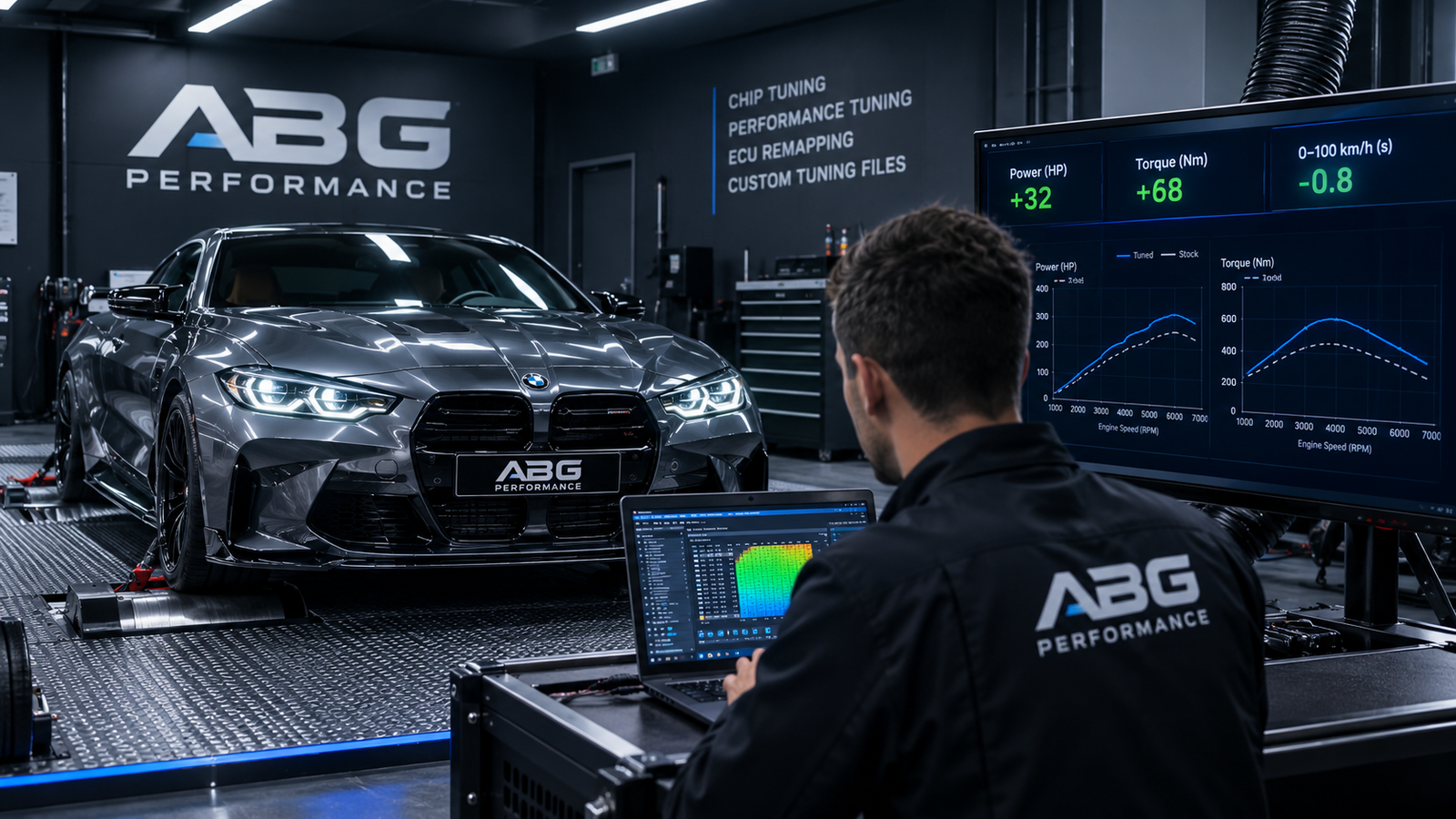
Custom ECU Tuning Files: How Professional Calibration Works
What Are Custom ECU Tuning Files?
Modern vehicles use an engine control unit (ECU) to manage essential engine functions. Depending on the vehicle, the ECU controls parameters such as fuel injection, ignition timing, boost pressure, torque management, and other operating strategies.
Custom ECU tuning files are software calibrations prepared for a particular vehicle and ECU configuration.
The objective is to match the calibration to the vehicle's original software, engine setup, intended tuning stage, and relevant component limitations.
For workshops and tuning professionals, accurate vehicle identification and file compatibility are essential parts of this process.
Why Does Original ECU Data Matter?
The original ECU file provides important information about the software currently installed in the vehicle.
Two vehicles with the same make, model, and engine designation may have different ECU hardware, software versions, or factory configurations. Selecting a file based only on the vehicle's model name can therefore lead to compatibility problems.
Before preparing a tuning file, the relevant ECU identification and original data should be checked against the intended calibration.
This helps establish whether the file is appropriate for the vehicle and whether additional technical information is needed.
How Does the Custom ECU File Process Work?
A professional ECU tuning workflow generally involves several steps.
Step 1: Identify the Vehicle and ECU
The process starts with the vehicle's make, model, engine, ECU type, and available software identification information.
Details about existing hardware modifications and the requested tuning stage may also be necessary.
Step 2: Read the Original ECU File
Compatible equipment is used to obtain the original ECU data. Depending on the vehicle and ECU, this may be done through OBD, bench mode, or boot mode.
The appropriate method depends on the ECU design, available access, and the tools supported for that application.
Step 3: Prepare the Calibration
A qualified calibrator reviews the available information and prepares a file appropriate for the vehicle's configuration and performance objectives.
Calibration decisions may involve boost control, torque management, fuel delivery, ignition timing, and other relevant parameters, depending on the engine and ECU.
Changes should respect component limits and retain appropriate engine protection strategies.
Step 4: Check Compatibility and File Integrity
Before installation, the file should be checked for compatibility with the target ECU and for data integrity, including any required checksum corrections.
These checks are important but do not, by themselves, prove that a calibration is safe or correctly optimized.
Step 5: Install and Verify
The file is installed using a suitable procedure. Diagnostic checks help identify faults, while performance measurements may be used to evaluate the results when appropriate equipment is available.
The vehicle should be assessed according to its condition, configuration, and intended use.
Custom Files vs Generic ECU Maps
A generic map is developed for a defined application and may be suitable for vehicles that match its intended configuration.
A custom file can be prepared with reference to the vehicle's original ECU data and specific requirements. This may be particularly valuable when ECU software versions, hardware modifications, or transmission configurations differ.
However, the word “custom” alone does not guarantee better performance or reliability. The quality of the calibration, the accuracy of the supplied information, and the verification process remain critical.
When selecting a tuning-file provider, workshops should look for clear compatibility procedures, technical expertise, and appropriate support.
Why ECU Compatibility Matters
Using an incompatible file can result in failed programming, diagnostic faults, unexpected engine behavior, or a vehicle that cannot start correctly.
Compatibility checks help reduce these risks by confirming that the calibration is intended for the relevant ECU configuration.
Accurate information is especially important when working with different ECU families, software revisions, and programming methods.
If the available information is incomplete or uncertain, the correct approach is to investigate further rather than assume that a file will work.
What Should Workshops Look for in a Tuning File Service?
For workshops that process ECU tuning requests regularly, a dependable workflow can make a significant difference.
Consider the following when choosing a service:
-
Accurate identification: The provider should establish which ECU and software configuration the file targets.
-
Clear technical requirements: Workshops should know which vehicle details and original files are required.
-
Compatibility checks: The file should be reviewed against the supplied ECU information.
-
Technical support: A clear process for resolving file questions or compatibility issues is valuable.
-
Responsible calibration: Relevant engine and drivetrain limitations should be considered.
-
Legal compliance: Applicable emissions, road-use, and vehicle approval requirements must be respected.
A consistent process helps workshops manage customer expectations and reduce avoidable technical issues.
Can Custom ECU Tuning Improve Vehicle Performance?
Custom ECU tuning can improve power delivery, torque characteristics, and throttle response when the engine and ECU have suitable tuning potential.
The actual results depend on the vehicle, original calibration, mechanical condition, fuel, and quality of the new software.
Performance claims should be supported by appropriate evidence rather than assumed from the presence of a custom file alone.
For modified vehicles, the calibration should account for the installed hardware and intended operating conditions.
Find the Right Tuning Solution with ABG Performance
ABG Performance offers custom ECU tuning files for cars, vans, diesel and petrol engines, and performance builds, with an online service designed to support workshops and tuning professionals.
Choosing the right solution starts with accurate vehicle identification and a clear understanding of the required tuning stage.
Explore the available options and check the relevant vehicle and ECU requirements before proceeding.