ECU Data Logging: Why It Matters for Safe and Accurate Engine Tuning
What Is ECU Data Logging?
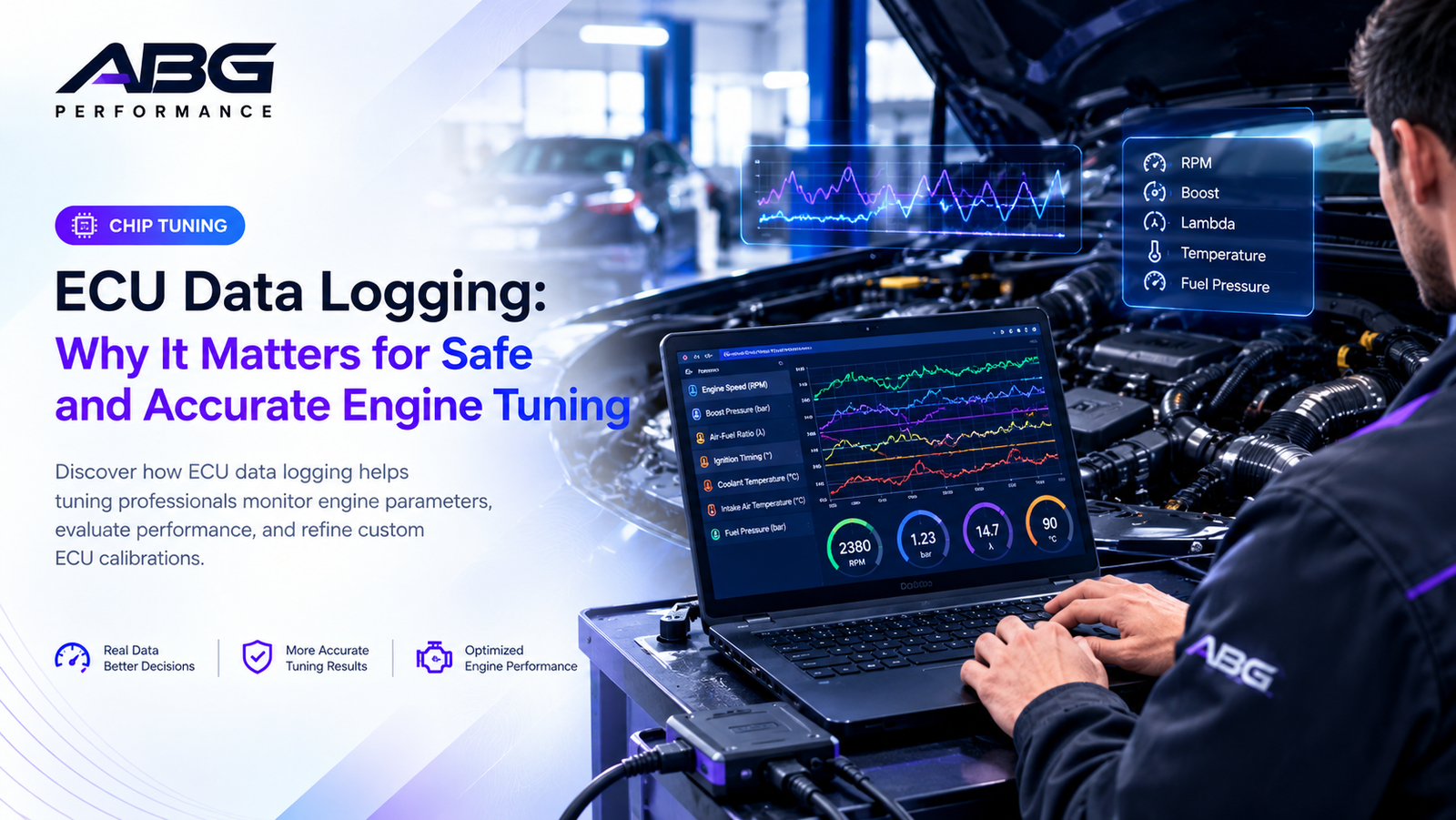
ECU data logging is the process of recording important engine operating parameters while a vehicle is running. These measurements help tuning professionals understand how an engine responds to different driving conditions and ECU calibration changes.
Modern engine control units monitor numerous parameters to manage fuel injection, ignition timing, boost pressure, and other engine functions. By collecting and analysing this information, tuners can make more informed calibration decisions.
Rather than relying only on driver feedback or estimated performance improvements, data logging provides measurable information about engine behaviour.
Why Is Data Logging Important in Chiptuning?
Every engine responds differently to calibration changes. Even vehicles with identical engine specifications may show different operating conditions depending on mileage, hardware, fuel quality, and mechanical condition.
ECU data logging helps identify these differences.
Professional tuners can use recorded data to:
-
Compare requested and actual boost pressure.
-
Monitor air-fuel ratio and lambda values.
-
Evaluate ignition timing and knock activity.
-
Observe engine coolant and intake air temperatures.
-
Check fuel pressure and injection-related parameters.
-
Identify unusual behaviour under different engine loads.
These measurements help determine whether a calibration is performing as expected and whether further investigation is necessary.
Key Engine Parameters Monitored During Data Logging
The available parameters depend on the vehicle, ECU type, sensors, and diagnostic equipment. However, several measurements are particularly useful during performance calibration.
1. Boost Pressure
Boost pressure is especially important for turbocharged engines. Comparing requested and actual boost pressure helps identify whether the turbocharger is delivering the expected pressure under different operating conditions.
2. Air-Fuel Ratio and Lambda
Air-fuel ratio describes the relationship between air and fuel during combustion. Lambda measurements help tuners evaluate whether the engine is operating according to its intended fueling targets.
3. Ignition Timing and Knock Activity
Ignition timing affects combustion and engine performance. Monitoring ignition behaviour and knock-related data can help identify conditions that require closer calibration review.
4. Engine Temperature
Coolant and intake air temperatures influence engine operation. Monitoring temperature changes provides useful information about operating conditions and thermal behaviour.
5. Fuel Pressure
Fuel pressure is another important parameter, particularly on engines operating under increased load. Comparing target and actual fuel pressure can help identify potential delivery limitations.
How Does the Data Logging Process Work?
A typical data logging workflow includes several steps:
Step 1: Initial Vehicle Assessment
The vehicle's condition, ECU identification, available diagnostic information, and existing calibration are reviewed.
Step 2: Baseline Data Collection
Relevant engine parameters are recorded before calibration changes to establish a reference point.
Step 3: Data Analysis
The recorded information is examined to understand how the engine behaves under specific operating conditions.
Step 4: Calibration Adjustments
Where necessary, the tuner reviews and adjusts relevant calibration parameters based on the available technical evidence.
Step 5: Verification
Additional measurements help evaluate the results and determine whether further refinement is required.
Data Logging vs. Guesswork: Understanding the Difference
A vehicle may feel faster after an ECU remap, but driver feedback alone cannot explain everything happening inside the engine.
Data logging provides additional technical insight by showing how different parameters change together over time.
For example, an unexpected difference between requested and actual boost pressure may require further investigation. Similarly, changes in ignition correction or fuel pressure can provide useful diagnostic information.
However, a single measurement should never be interpreted without considering engine load, temperature, vehicle configuration, and other relevant conditions.
Why Professional ECU Calibration Benefits from Data Analysis
Reliable ECU calibration involves more than changing software values. It requires understanding the vehicle's technical condition, evaluating available measurements, and verifying how the engine responds.
At ABG Performance, vehicle-specific information and appropriate calibration procedures are important considerations when working with custom ECU tuning files.
Final Thoughts
ECU data logging is an important part of modern engine performance analysis. It gives tuning professionals valuable information about engine behaviour and helps support more informed calibration decisions.
Whether working with petrol or diesel engines, understanding the relationship between recorded parameters can make the difference between simply changing ECU software and properly evaluating its results.
Looking for custom ECU tuning solutions? Explore ABG Performance to discover vehicle-specific tuning options and professional ECU file services.