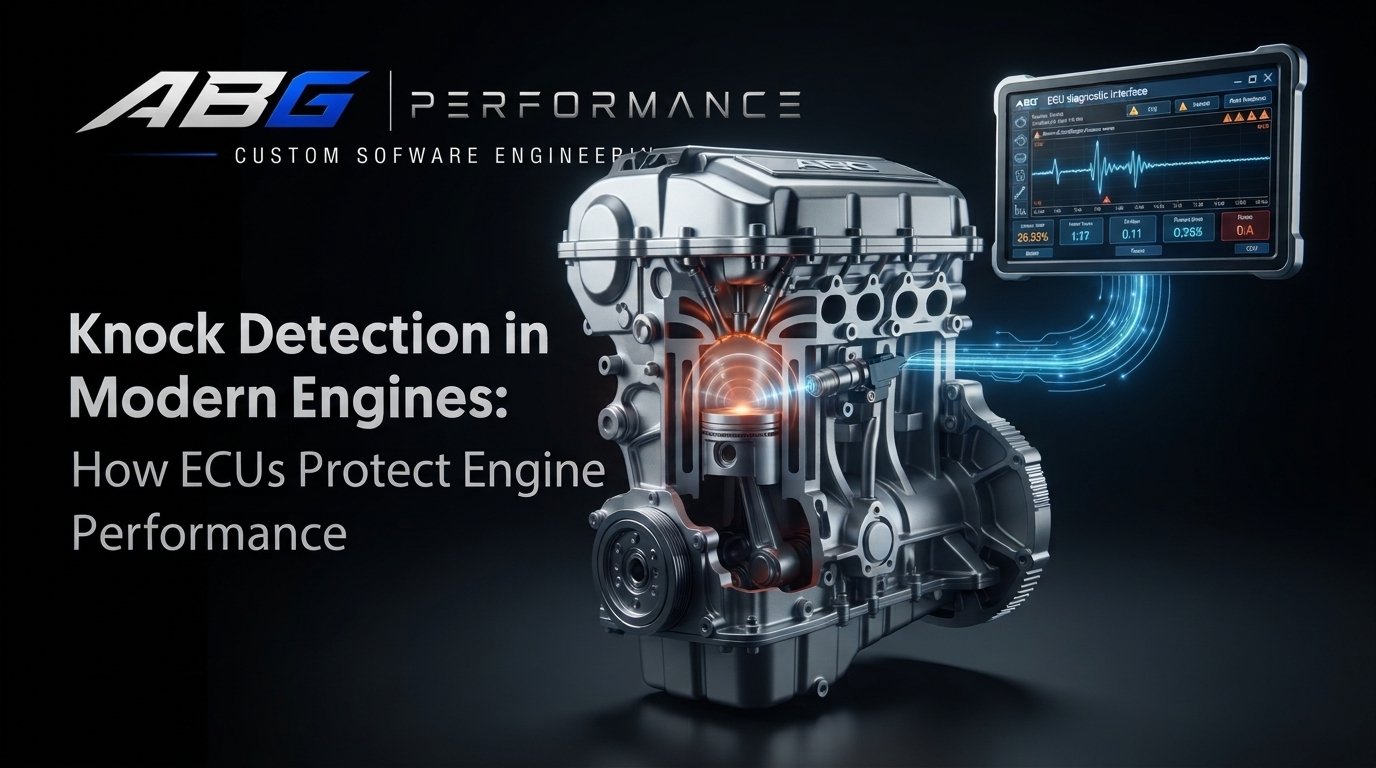
Knock Detection in Modern Engines: How ECUs Protect Engine Performance
Engine knock is one of the most important combustion-related problems that technicians must consider when working with modern petrol engines.
During normal combustion, the air-fuel mixture burns in a controlled process initiated by the spark plug. However, under certain conditions, parts of the unburned mixture can ignite unexpectedly, creating pressure waves inside the combustion chamber.
This phenomenon is commonly known as engine knock or detonation.
Modern engine management systems use knock detection technology to identify abnormal combustion behavior and help protect the engine.
What Causes Engine Knock?
Several factors can contribute to abnormal combustion in petrol engines.
Common causes include:
-
Low-octane fuel that cannot meet the engine's requirements.
-
Excessive ignition advance under certain operating conditions.
-
High intake air or combustion chamber temperatures.
-
Excessive cylinder pressure.
-
Carbon deposits inside the combustion chamber.
-
Incorrect engine calibration.
The likelihood of knock depends on the engine design, fuel characteristics, temperature, and operating conditions.
How Does a Knock Sensor Work?
A knock sensor is typically mounted on the engine block and uses piezoelectric technology to detect vibration patterns associated with combustion knock.
When abnormal vibration occurs, the sensor generates an electrical signal that is processed by the ECU.
The ECU evaluates this information to determine whether corrective action is necessary.
Depending on the engine management strategy, the system may:
-
Retard ignition timing.
-
Apply cylinder-specific ignition corrections.
-
Adjust engine operating parameters.
-
Activate additional protective strategies when required.
How Does the ECU Respond to Engine Knock?
The ECU continuously evaluates engine operating conditions and knock sensor signals.
When knock activity is detected, the ECU can reduce ignition advance to help prevent further abnormal combustion.
Many modern engine management systems also use knock adaptation. This allows the ECU to learn and apply corrections under specific operating conditions.
However, knock-control strategies vary between manufacturers and engine platforms.
Why Is Knock Control Important in ECU Tuning?
Performance tuning often involves changing parameters that influence cylinder pressure, combustion timing, and engine load.
As a result, knock monitoring becomes particularly important when modifying engine calibration.
Professional tuning should consider:
Ignition Timing: Excessive ignition advance can increase knock risk under certain conditions.
Fuel Quality: The selected calibration must be compatible with the fuel octane rating and composition.
Boost Pressure: Increasing turbocharger boost can increase cylinder pressure and thermal load.
Intake Temperature: Higher intake temperatures can increase the likelihood of knock.
Engine Protection: Factory knock-control functions and other protective strategies should be evaluated and preserved wherever possible.
Knock Detection During Dyno Testing
Dyno testing provides a controlled environment for evaluating engine performance under different load conditions.
During professional calibration, technicians can monitor relevant parameters such as:
-
Ignition timing.
-
Knock correction values.
-
Requested and actual boost pressure.
-
Lambda values.
-
Intake air temperature.
-
Engine coolant temperature.
These measurements help identify potential problems and evaluate whether the engine operates within appropriate limits.
It is important to understand that the absence of detected knock does not automatically guarantee that an engine calibration is safe. Sensor limitations, operating conditions, and other engine protection parameters must also be considered.
Can Engine Knock Damage an Engine?
Persistent or severe knock can cause significant mechanical damage.
Potential consequences include:
-
Piston damage.
-
Damaged piston rings or ring lands.
-
Spark plug damage.
-
Excessive thermal stress.
-
Damage to other combustion chamber components.
The severity depends on the intensity, duration, and frequency of abnormal combustion.
This is why proper knock monitoring and engine protection strategies are essential during performance modifications.