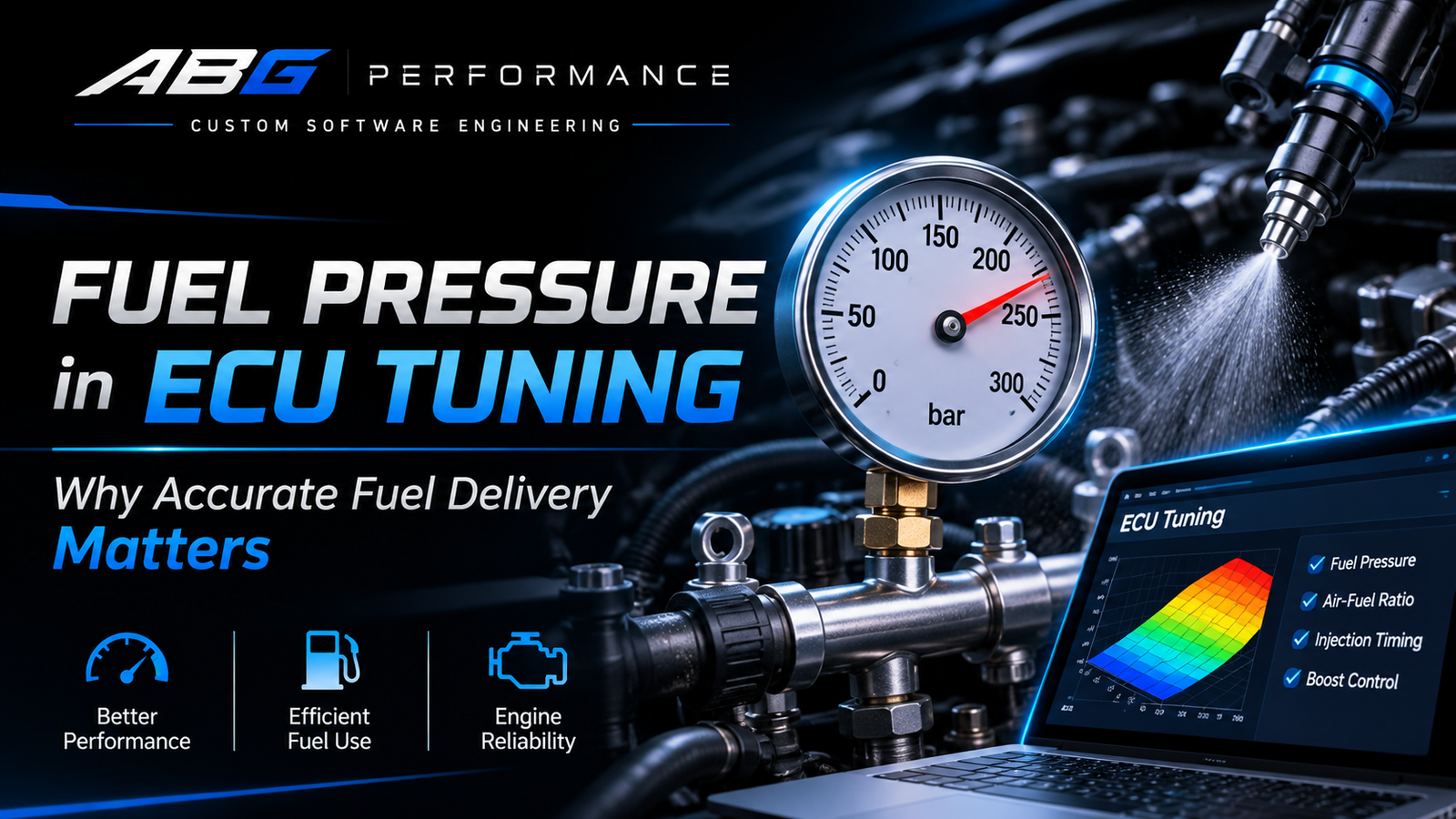
Fuel pressure is one of the most important factors in modern engine management systems. It determines how effectively fuel is delivered to the engine and plays a major role in maintaining the correct air-fuel mixture.
During ECU tuning, fuel pressure becomes particularly important when increasing engine power or modifying turbocharger boost levels. Without proper fuel delivery, an engine may experience performance limitations, unstable combustion, or potentially serious mechanical problems.
1. How Does Fuel Pressure Work?
The fuel system supplies petrol or diesel from the tank to the engine through a series of pumps, fuel lines, and injectors.
In modern gasoline direct-injection engines, the system typically includes two pressure stages:
- Low-pressure system: Delivers fuel from the tank to the high-pressure pump.
- High-pressure system: Pressurizes fuel and supplies it to the fuel rail and injectors.
The ECU works with pressure sensors and control components to maintain the required fuel pressure under different engine operating conditions.
According to Bosch, some gasoline direct-injection systems operate at fuel rail pressures of up to 350 bar.
2. Why Is Fuel Pressure Important in ECU Tuning?
When an engine produces more power, its fuel requirements generally increase.
During performance tuning, the ECU calibration must account for:
- Increased fuel demand under higher engine loads.
- Correct injector operating conditions.
- Stable fuel pressure during acceleration.
- Accurate air-fuel mixture control.
- Consistent combustion at higher RPM.
If the fuel system cannot maintain the required pressure, the engine may not receive the intended fuel quantity. This can limit performance and compromise engine safety.
3. Common Symptoms of Incorrect Fuel Pressure
Incorrect fuel pressure can affect engine performance in several ways.
Common warning signs include:
- Engine hesitation during acceleration.
- Reduced engine power.
- Difficult starting.
- Unstable engine operation.
- Misfires under high load.
- Fuel pressure-related diagnostic trouble codes.
These symptoms can also result from other mechanical or electrical faults, so proper diagnostics are essential.
4. How ECU Tuning Optimizes Fuel Delivery
Professional ECU calibration involves more than simply increasing fuel pressure.
A proper tuning process considers several important parameters:
Fuel Pressure Targets: The ECU must maintain pressure appropriate for engine load and operating conditions.
Injection Timing: Fuel injection timing must be coordinated with the combustion process.
Injector Calibration: Injector characteristics and available fuel delivery capacity must match the engine's requirements.
Fuel System Monitoring: Comparing requested and actual fuel pressure helps identify potential limitations.
Air-Fuel Ratio: Fuel delivery must remain appropriate for the engine's operating conditions and safety requirements.
5. Why Professional Calibration Matters
Every engine has specific fuel system limitations. Increasing boost pressure or engine output without checking fuel delivery capacity can create unnecessary risks.
Professional ECU tuning should always consider the condition of the fuel pump, injectors, pressure sensors, and related components.
At ABG Performance, we focus on professional ECU calibration that balances engine performance, fuel delivery, and long-term reliability.