Lambda Control in ECU Tuning: Understanding Air-Fuel Ratio
Lambda control is one of the most important aspects of modern engine management. It helps the engine maintain the correct air-fuel mixture under different operating conditions, ensuring efficient combustion, stable performance, and controlled emissions.
In modern vehicles, the Engine Control Unit (ECU) continuously monitors and adjusts fuel delivery based on sensor information. Understanding lambda values is therefore essential when modifying engine calibration for performance improvements.
What Is Lambda in Engine Management?
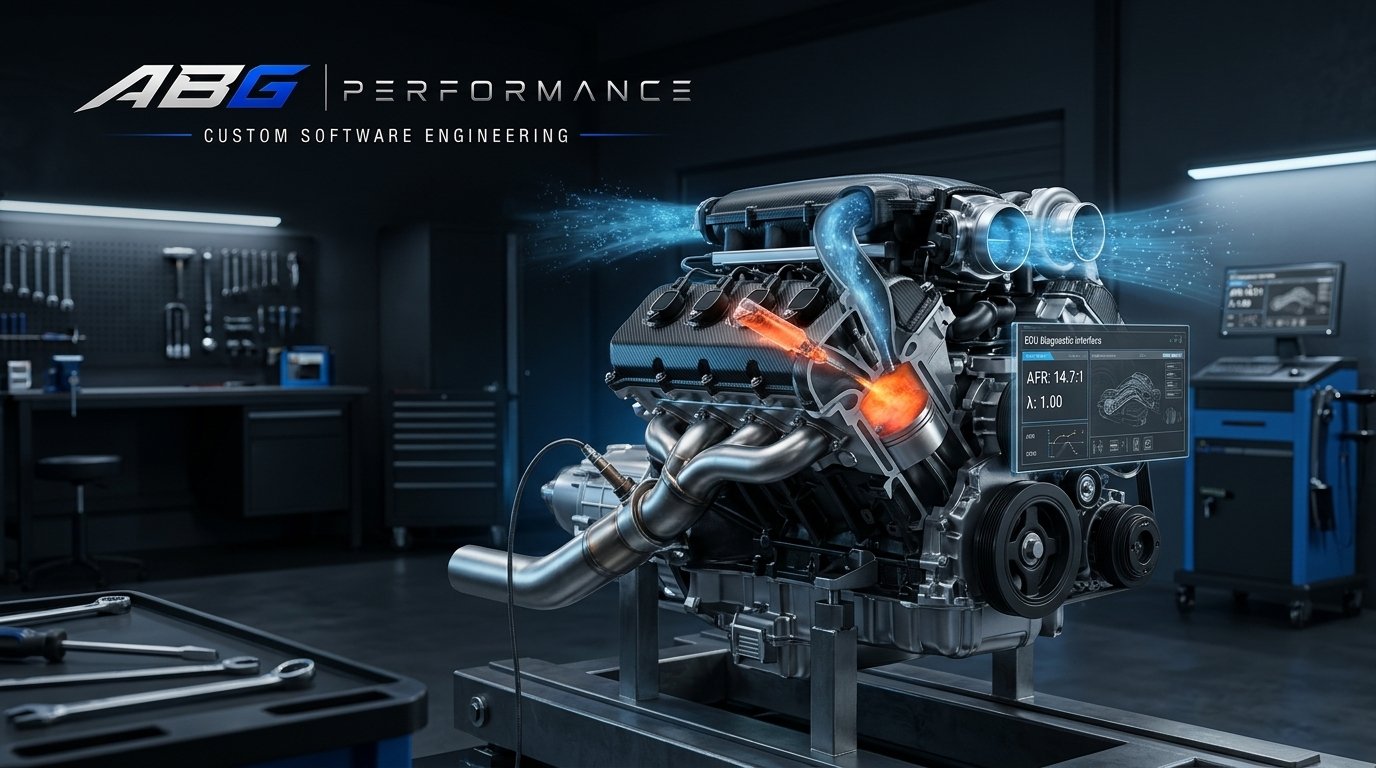
Lambda (λ) represents the relationship between the actual air-fuel ratio entering the engine and the stoichiometric air-fuel ratio required for complete combustion.
A lambda value of 1.00 indicates a stoichiometric mixture. Values below 1.00 represent a richer mixture, while values above 1.00 indicate a leaner mixture.
For conventional gasoline engines, the stoichiometric air-fuel ratio is approximately 14.7:1, although the exact value depends on fuel composition.
How Does the ECU Control Lambda?
The ECU uses information from several sensors to calculate and adjust fuel injection.
Important components include:
-
Oxygen Sensors: Measure oxygen content in the exhaust gases.
-
Mass Air Flow (MAF) Sensor: Measures the amount of air entering the engine.
-
Manifold Absolute Pressure (MAP) Sensor: Helps calculate engine load.
-
Fuel Injectors: Deliver the required amount of fuel.
-
Engine Temperature Sensors: Help determine appropriate fueling during different temperature conditions.
Based on these inputs, the ECU adjusts injection duration to achieve the desired air-fuel mixture.
Open-Loop vs Closed-Loop Lambda Control
Modern engine management systems generally operate using two fuel-control strategies.
Closed-Loop Control
During closed-loop operation, the ECU uses feedback from oxygen sensors to adjust fuel delivery. This allows the engine to maintain its target lambda value and compensate for changing operating conditions.
Open-Loop Control
During open-loop operation, the ECU follows predefined fueling targets without relying on continuous oxygen-sensor feedback for fuel correction. This strategy is commonly used under certain high-load conditions and during specific engine operating phases.
Why Is Lambda Important in ECU Tuning?
Changing engine calibration can significantly affect combustion characteristics.
A professional ECU calibration must consider:
-
Engine load and operating conditions.
-
Fuel quality and composition.
-
Turbocharger configuration.
-
Injector capacity and fuel-system limitations.
-
Exhaust temperature and component protection.
-
Emissions requirements.
Incorrect fueling targets can increase combustion temperatures, reduce performance, cause excessive fuel consumption, or create unsafe operating conditions.
The Role of Wideband Lambda Sensors
Wideband lambda sensors provide more detailed air-fuel ratio measurements across a broader operating range than conventional narrowband sensors.
They are particularly useful during engine calibration, dyno testing, and performance validation.
By comparing actual lambda readings with the ECU's requested values, technicians can identify fueling deviations and evaluate whether the calibration behaves as expected.