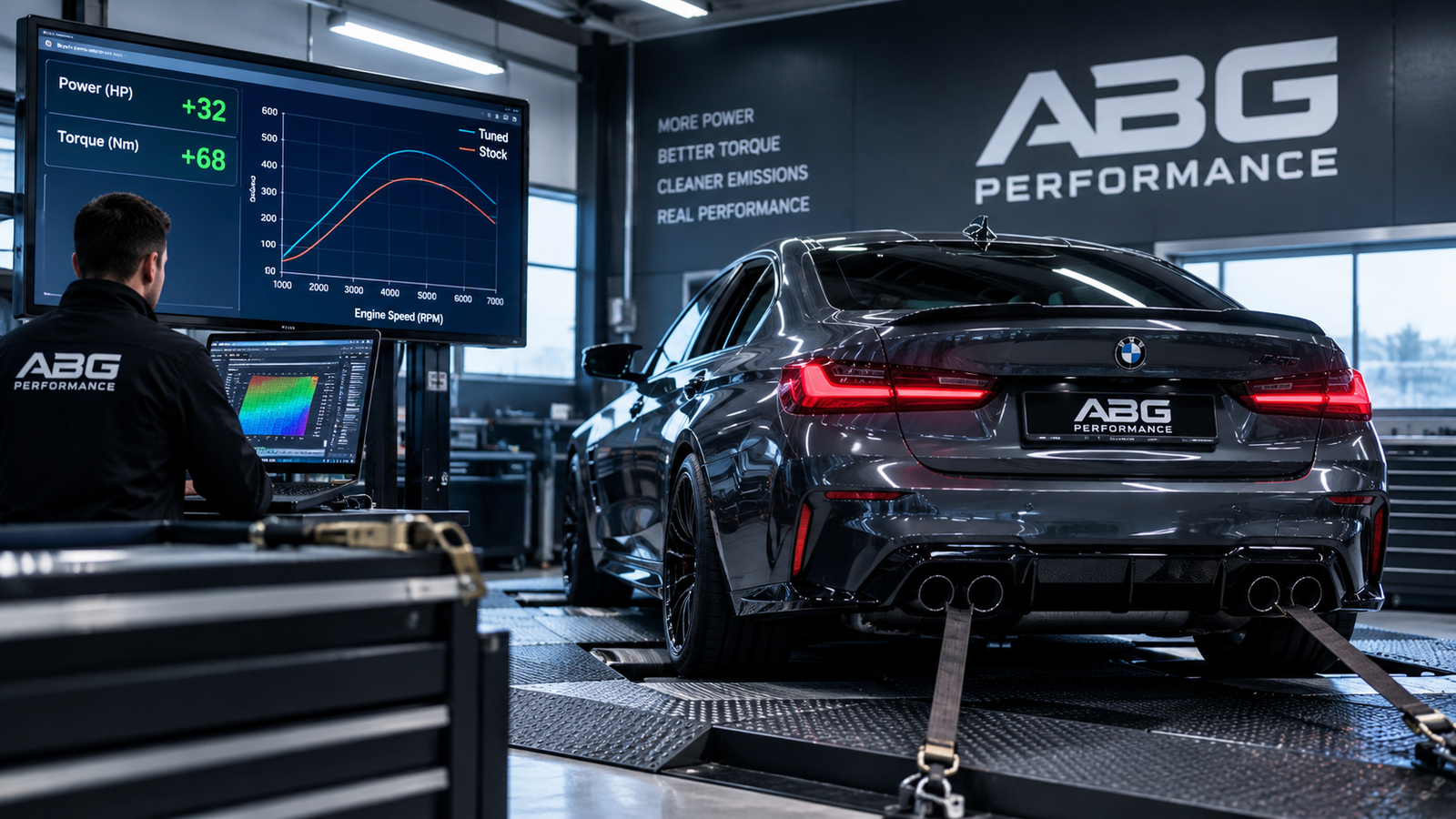
Stage 1 Chiptuning: How Dyno Testing Helps Measure Real Performance Gains
What Is Stage 1 Chiptuning?
Stage 1 chiptuning is a software-based optimization of a vehicle's engine control unit (ECU). The ECU manages essential engine parameters, including fuel delivery, ignition timing, boost pressure on turbocharged engines, and torque limitations.
A carefully developed Stage 1 calibration aims to improve engine performance without requiring major hardware modifications. Depending on the engine and original factory calibration, drivers may experience stronger acceleration, improved torque delivery, and more responsive throttle behavior.
However, results vary between vehicles. Engine type, ECU software, mechanical condition, fuel quality, and transmission limitations all influence the achievable outcome.
Why Is Dyno Testing Important?
A chassis dynamometer, commonly called a dyno, measures a vehicle's performance under controlled testing conditions.
During a dyno test, the vehicle's driven wheels operate on rollers while the equipment records relevant performance data. Depending on the test setup, this data can help technicians evaluate power delivery, torque characteristics, and engine behavior across different engine speeds.
Dyno testing can be useful both before and after an ECU remap. Comparing results under consistent conditions helps determine whether the calibration has delivered the expected performance improvements.
A dyno graph should not be treated as a guarantee of real-world acceleration. Results depend on the equipment, test procedure, correction method, and vehicle configuration.
Understanding Horsepower and Torque
Two important measurements in engine performance are horsepower and torque.
Horsepower: Measuring Engine Power
Horsepower describes the rate at which an engine performs work. Higher power can contribute to improved acceleration and higher performance potential, depending on vehicle weight, gearing, traction, and other factors.
For turbocharged engines, suitable ECU calibration may increase available power by optimizing relevant engine parameters within appropriate limits.
Torque: Understanding Pulling Force
Torque describes rotational force produced by the engine. Drivers often notice torque improvements during everyday driving, particularly when accelerating from lower engine speeds or overtaking.
A good calibration should consider how torque is delivered throughout the usable rev range, not simply aim for the highest peak value.
Excessive torque can place additional stress on the clutch, gearbox, and other drivetrain components. This is why component limitations must be considered during tuning.
What Does a Stock vs Tuned Dyno Comparison Show?
A stock-versus-tuned comparison evaluates the vehicle's measured performance before and after ECU calibration.
A useful comparison may include:
-
Peak power and the engine speed at which it occurs.
-
Torque delivery across the rev range.
-
Changes in the shape of the power and torque curves.
-
Consistency between repeated test runs.
-
Any relevant diagnostic issues identified during testing.
For meaningful results, both measurements should use comparable testing conditions and documented procedures.
The performance figures displayed in a demonstration image should be treated as illustrative unless they are supported by verified measurements from the specific vehicle.
What Influences Stage 1 Performance Gains?
Not every engine responds equally to chiptuning. Several factors influence the final result.
Engine design: Turbocharged petrol and diesel engines generally have different tuning potential from naturally aspirated engines.
Original factory calibration: The available headroom depends on how the manufacturer configured the engine and its supporting systems.
Vehicle condition: Existing mechanical faults, worn components, and cooling problems can affect performance.
Fuel quality: The calibration must suit the fuel available to the vehicle.
Transmission and drivetrain: Torque delivery should remain appropriate for the vehicle's components and intended use.
These factors explain why vehicle-specific calibration is more useful than relying on universal performance claims.
Is Stage 1 Chiptuning Suitable for Daily Driving?
A suitable Stage 1 tune can be designed for everyday use, provided the vehicle is mechanically sound and the calibration respects relevant operating limits.
Before tuning, technicians should check for existing faults and consider engine temperatures, boost limits, fuel requirements, and drivetrain capacity. Appropriate engine protection strategies should also be retained.
No tuning approach can guarantee that the vehicle will have exactly the same reliability as it did with the original factory software. Owners should also check applicable emissions rules, road-use regulations, insurance requirements, and approval obligations.
Choose a Vehicle-Specific Tuning Solution
Stage 1 chiptuning should begin with accurate vehicle and ECU identification, realistic performance expectations, and a suitable calibration strategy.
Dyno testing can help assess the results, while diagnostic checks and responsible calibration practices help support a consistent process.
Explore ABG Performance
Looking for a suitable tuning option for your vehicle? Explore the ABG Performance vehicle catalog to learn more about available chiptuning solutions.