Understanding Transmission Torque Limits
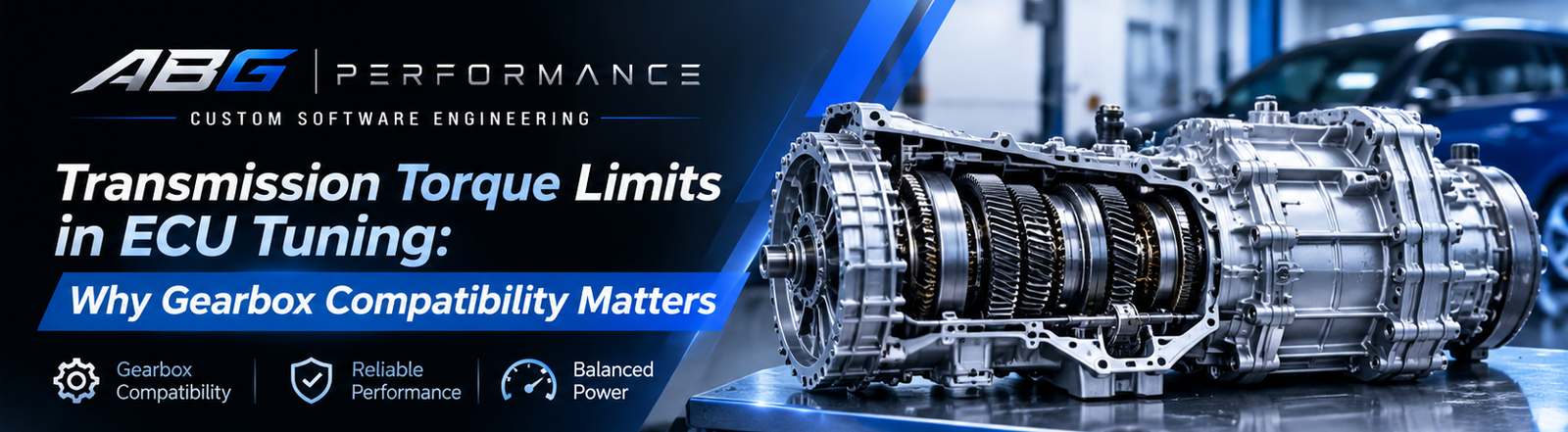
When discussing engine performance tuning, most attention goes to horsepower and engine torque. However, the transmission is equally important when determining how much performance a vehicle can reliably deliver.
Every gearbox is designed to operate within certain mechanical and electronic limits. These limits depend on its construction, clutch capacity, internal components, cooling system, and control software.
During ECU tuning, increasing engine torque without considering the transmission can create unnecessary stress on the drivetrain. This is why professional calibration should consider the complete powertrain rather than focusing only on engine output.
Why Gearbox Torque Limits Matter
A vehicle's transmission transfers engine power to the wheels. Depending on its design, it must manage different torque levels under various driving conditions.
When engine torque exceeds the transmission's intended operating range, several problems may occur:
-
Clutch Slippage: Increased torque can exceed the available clutch holding capacity, particularly in manual and dual-clutch transmissions.
-
Increased Heat: Higher mechanical loads can generate additional heat inside the transmission.
-
Harsh Gear Changes: Transmission control systems may struggle to maintain smooth shifting when torque delivery changes significantly.
-
Component Wear: Excessive torque can increase stress on gears, bearings, clutch packs, and other drivetrain components.
These effects depend on the gearbox type, vehicle condition, and operating conditions.
How ECU Calibration Works With Transmission Limits
Modern vehicles use electronic systems to coordinate engine output and transmission operation.
The engine control unit (ECU) manages parameters such as fuel delivery, ignition timing, boost pressure, and torque requests. The transmission control unit (TCU), where fitted, manages gear selection, clutch pressure, and shifting strategies.
These systems often communicate with each other to control torque during gear changes and protect drivetrain components.
Professional ECU calibration should therefore consider:
-
Engine Torque Delivery: Torque should be developed progressively and appropriately across the engine's operating range.
-
Transmission Specifications: The gearbox type and its known operating limits should be considered before changing engine calibration.
-
Torque Monitoring: Factory monitoring and protection strategies should remain functional.
-
Driving Conditions: The calibration should account for everyday driving, acceleration, and varying engine loads.
-
Vehicle Condition: Existing mechanical issues should be addressed before increasing performance.
Does Every Vehicle Need TCU Tuning?
No. Not every vehicle requires transmission software modifications when receiving an ECU tune.
For many stock vehicles, a carefully developed Stage 1 calibration can work with the original transmission software, provided the engine output remains appropriate for the gearbox.
However, some vehicles may benefit from coordinated ECU and TCU calibration, particularly when significant hardware modifications or higher performance targets are involved.
The correct approach depends on the specific transmission, its software, mechanical condition, and intended use.
The Importance of Vehicle-Specific Calibration
There is no universal torque target suitable for every vehicle.
Two cars with similar engine capacities may use completely different transmissions, clutch systems, and drivetrain configurations. Even the same gearbox model can have different specifications depending on the vehicle application.
At ABG Performance, custom ECU tuning files are developed using original ECU data and vehicle-specific information. This approach helps ensure that the requested performance changes are considered in relation to the vehicle's configuration.
Conclusion
Engine performance is not determined by horsepower alone. The transmission plays a critical role in transferring power and maintaining reliable vehicle operation.
Understanding gearbox torque limits before ECU tuning helps establish realistic performance targets and supports a more balanced calibration.
Whether working with a manual, automatic, or dual-clutch transmission, compatibility between engine output and drivetrain capacity should always be part of a professional tuning strategy.
ABG Performance – Custom ECU Calibration for Balanced Performance.