Ignition Timing in ECU Tuning: Balancing Engine Power and Safety
Ignition timing is one of the most important parameters in petrol engine management. It determines when the spark plug ignites the air-fuel mixture inside the combustion chamber.
In modern vehicles, the ECU continuously adjusts ignition timing according to engine speed, load, temperature, and other operating conditions.
Understanding ignition timing is essential for anyone interested in professional ECU tuning.
What Is Ignition Timing?
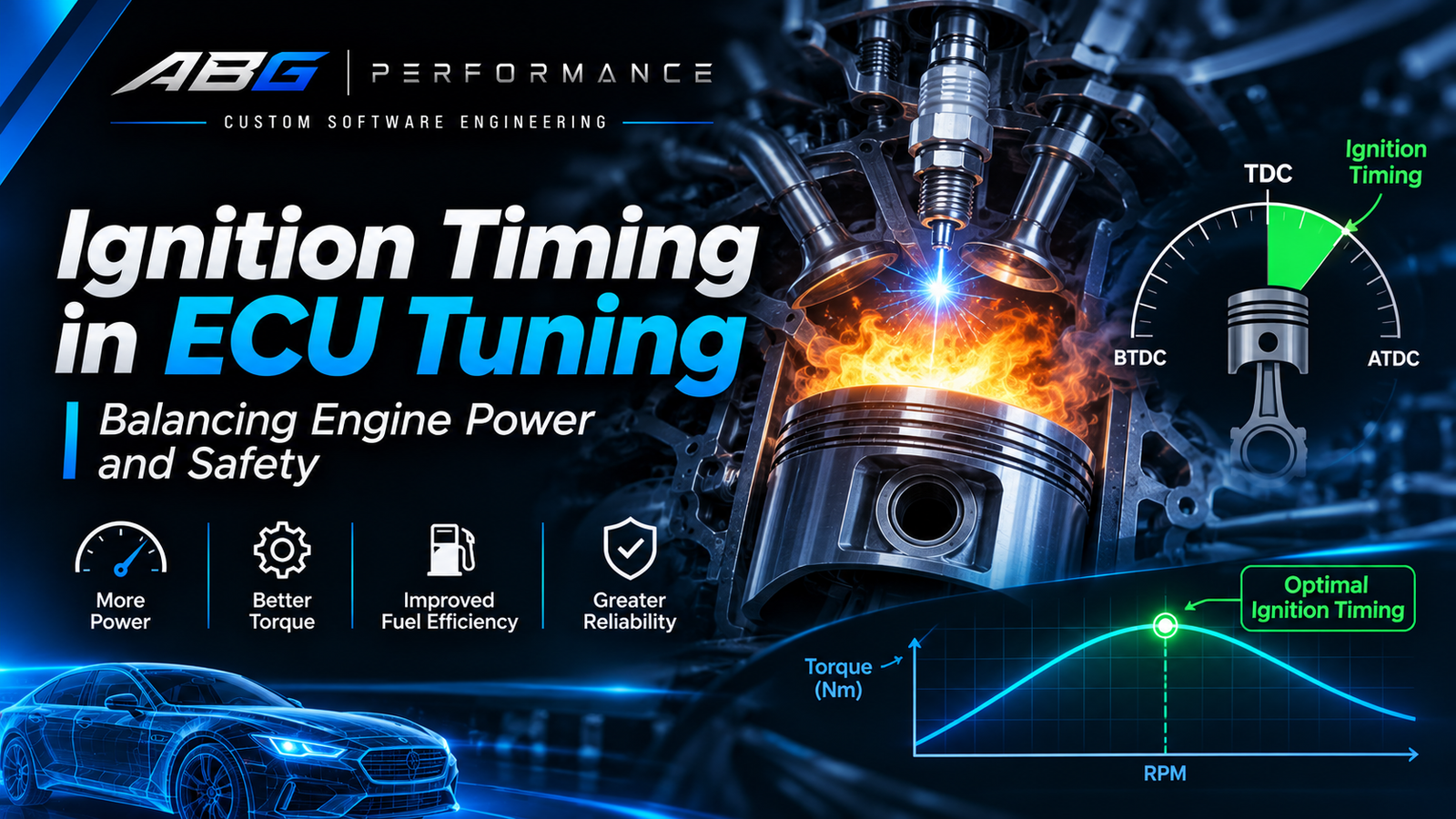
Ignition timing describes the position of the crankshaft when the spark plug produces a spark relative to the piston reaching Top Dead Centre (TDC).
It is commonly measured in degrees before or after TDC.
The correct ignition timing helps ensure that combustion produces useful pressure at the appropriate point in the engine's power stroke.
How Ignition Timing Affects Engine Performance
1. Engine Power
Optimised ignition timing can improve combustion efficiency and help an engine produce more power under suitable operating conditions.
2. Torque Delivery
Ignition timing influences cylinder pressure development, which directly affects the torque produced by the engine.
3. Fuel Efficiency
Appropriate ignition timing can help improve combustion efficiency and fuel consumption under certain operating conditions.
4. Engine Temperature
Incorrect ignition timing can increase thermal stress and affect combustion behaviour.
What Happens When Ignition Timing Is Too Advanced?
Excessive ignition advance can increase the risk of engine knock or detonation.
Potential consequences include:
-
Abnormal combustion.
-
Increased cylinder pressure.
-
Excessive thermal and mechanical stress.
-
Reduced engine reliability.
-
Potential internal engine damage.
Modern ECUs often use knock sensors and protective strategies to help manage these risks.
What Happens When Ignition Timing Is Too Retarded?
Excessively retarded ignition timing can result in:
-
Reduced engine performance.
-
Poor combustion efficiency.
-
Increased exhaust gas temperatures.
-
Higher fuel consumption in certain operating conditions.
The correct calibration depends on the specific engine and its operating environment.
How ECU Tuning Optimises Ignition Timing
Professional ECU calibration considers several factors:
-
Engine RPM and load.
-
Fuel quality and octane rating.
-
Intake air temperature.
-
Engine coolant temperature.
-
Knock sensor feedback.
-
Manufacturer-defined operating limits.
Ignition timing should be validated through appropriate diagnostic equipment and controlled testing.
Why Ignition Timing Requires Professional Calibration
Every engine has different mechanical characteristics and operating limitations.
A calibration that works well on one engine may not be suitable for another, even when both engines share similar specifications.
Professional tuning focuses on balancing performance, combustion efficiency, and engine reliability.